

Top Animals to Spot in the Cuyabeno Reserve
Mammals
Mammals are warm-blooded animals that breathe air and care for their young.
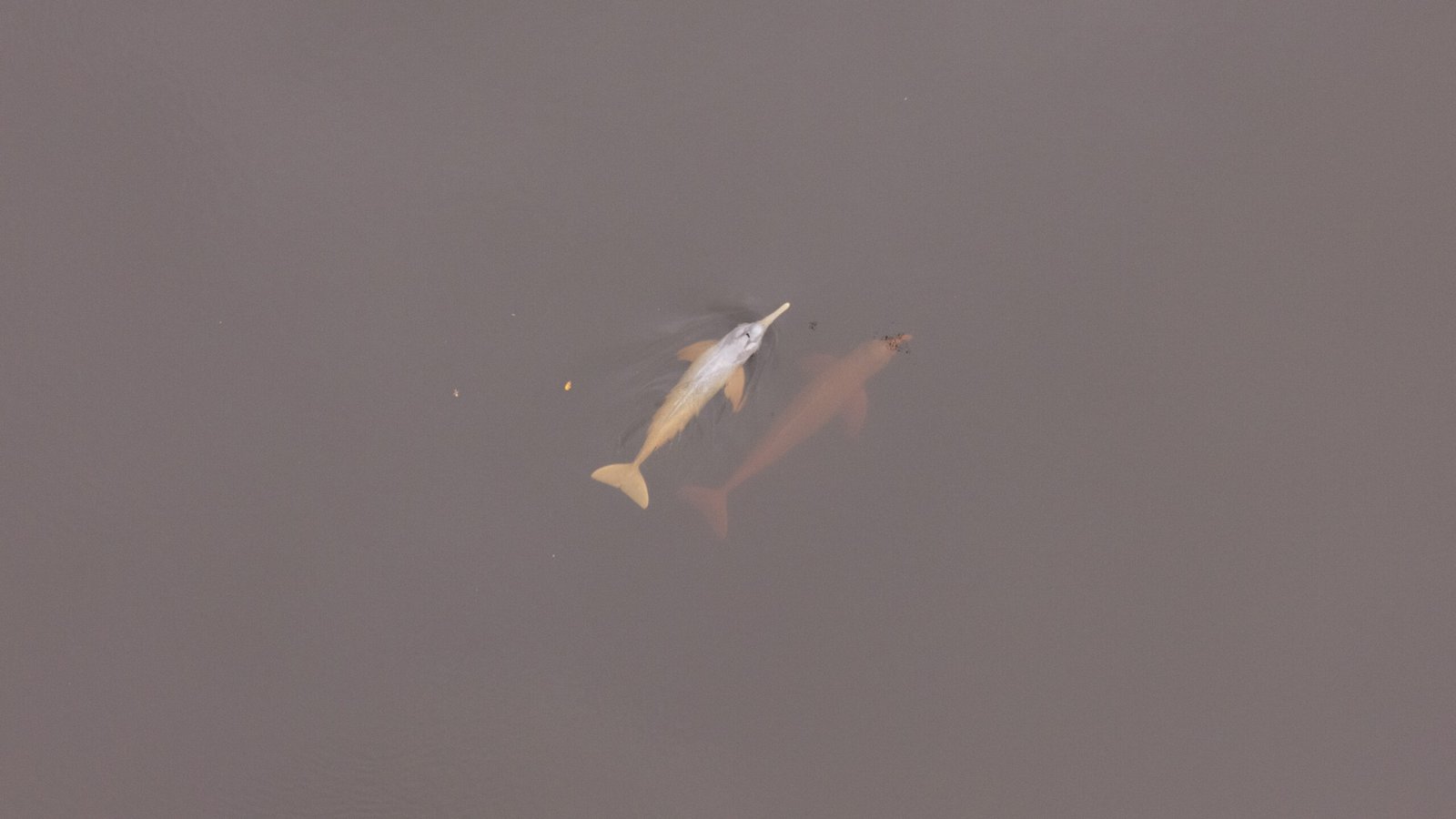
Amazon Pink Dolphin - The pink river dolphin lives in freshwater rivers and uses echolocation to navigate and hunt fish. Its color can range from gray to pink and often becomes brighter as the animal ages.


Birds
Birds are warm-blooded animals with feathers and beaks, they lay eggs.
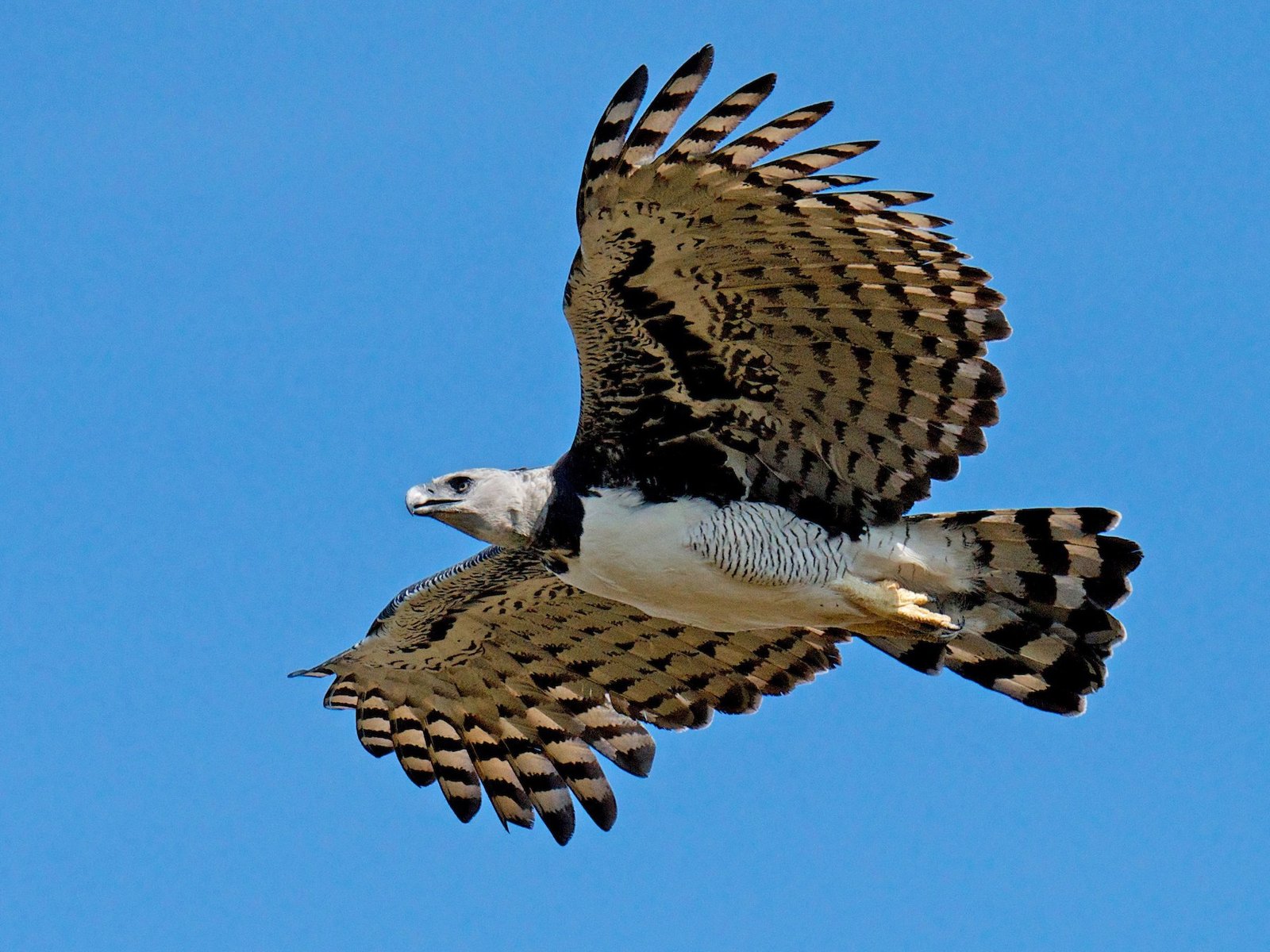
Harpy Eagle - The harpy eagle has extremely large talons, larger than a grizzly bear’s claws. It hunts mainly monkeys and sloths and nests high in tall rainforest trees.


Reptilians
Reptiles are cold-blooded animals with scaly skin that rely on external heat.
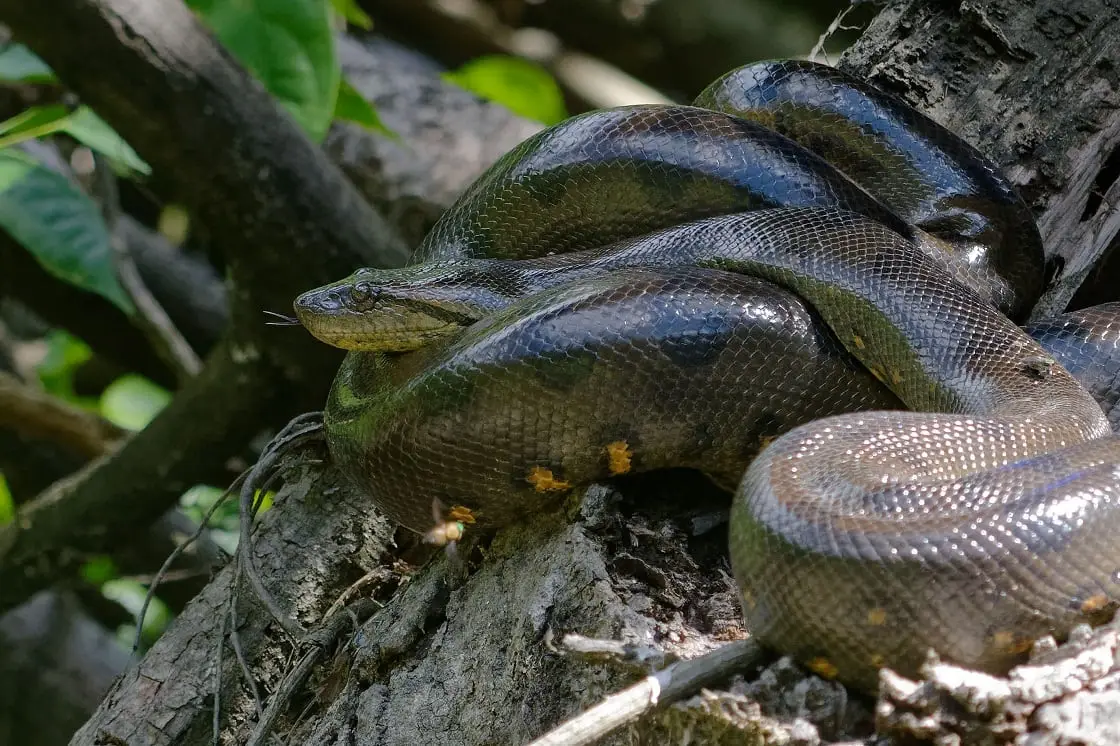
Anaconda - The anaconda is one of the largest snakes in the world and spends much of its time in water. It can stay submerged for long periods and often hunts by waiting for prey to pass.


Insects & Arachnids
Insects and arachnids are small animals with hard outer bodies and jointed legs.

Blue Morpho Butterfly - The blue morpho butterfly is known for its bright blue wings, which flash in flight but appear brown when closed. This color change helps confuse predators.


List of Animals
Cuyabeno Wildlife Reserve
Mammals
- Jaguar (Panthera onca) – The apex predator of the rainforest, playing a crucial role in controlling prey populations.
- Amazon Pink Dolphin (Inia geoffrensis) – A unique freshwater dolphin known for its distinctive pink color.
- Giant Otter (Pteronura brasiliensis) – Social and energetic otters that live in family groups and hunt cooperatively.
- Howler Monkey (Alouatta spp.) – Known for their loud howls, which can be heard over great distances.
- Three-Toed Sloth (Bradypus spp.) – Slow-moving arboreal mammals that spend most of their lives in trees.
- Capybara (Hydrochoerus hydrochaeris) – The world’s largest rodent, often found near water in social groups.
- Squirrel Monkey (Saimiri spp.) – Small, agile monkeys that live in large, active troops.
- White-Fronted Capuchin Monkey (Cebus albifrons) – Intelligent and adaptable monkeys known for their tool use.
- Woolly Monkey (Lagothrix spp.) – Large-bodied monkeys that are important seed dispersers in the forest.
- Golden-Mantled Tamarin (Saguinus tripartitus) – Small, energetic monkeys that live in the lower and middle levels of the forest canopy.
- Ocelot (Leopardus pardalis) – A small, nocturnal wild cat with a beautiful, spotted coat.
- Puma (Puma concolor) – A versatile predator that occupies a wide range of habitats in the Americas.
- Baird’s Tapir (Tapirus bairdii) – Large herbivores that play a key role in seed dispersal.
- Collared Peccary (Pecari tajacu) – Social animals that forage for a variety of foods, including fruits and small animals.
- Red Brocket Deer (Mazama americana) – Solitary, small deer that live in dense forests.
- Red-Rumped Agouti (Dasyprocta leporina) – Rodents that are important for seed dispersal and forest regeneration.
- Giant Anteater (Myrmecophaga tridactyla) – Specialized insectivores with long tongues for feeding on ants and termites.
- Southern Tamandua (Tamandua tetradactyla) – Tree-dwelling anteaters that feed primarily on ants and termites.
- Nine-Banded Armadillo (Dasypus novemcinctus) – Small, armored mammals that dig for insects and other invertebrates.
- Common Vampire Bat (Desmodus rotundus) – Bats that feed on the blood of mammals and birds.
- Greater Bulldog Bat (Noctilio leporinus) – Fishing bats that use echolocation to catch fish at night.
- Pygmy Marmoset (Cebuella pygmaea) – The world’s smallest monkeys, often found in groups in the lower forest canopy.
- Kinkajou (Potos flavus) – Nocturnal, arboreal mammals known for their long, prehensile tails and fruit diet.
- Common Opossum (Didelphis marsupialis) – Versatile marsupials that scavenge and hunt for a variety of foods.
- Neotropical River Otter (Lontra longicaudis) – Semi-aquatic mammals that hunt fish and invertebrates in rivers and streams.
Birds
- Harpy Eagle (Harpia harpyja) – One of the largest and most powerful eagles, a top predator in the rainforest canopy.
- Scarlet Macaw (Ara macao) – Vibrant parrots known for their striking red, yellow, and blue plumage.
- Hoatzin (Opisthocomus hoazin) – Unique birds with a digestive system that ferments leaves, earning them the nickname “Stinky Turkey.”
- Toucan (Ramphastos spp.) – Iconic birds with large, colorful bills that play a key role in seed dispersal.
- Great Potoo (Nyctibius grandis) – Nocturnal birds known for their excellent camouflage and eerie calls.
- Amazon Kingfisher (Chloroceryle amazona) – Brightly colored birds that hunt fish from perches along waterways.
- Blue-and-Yellow Macaw (Ara ararauna) – Large, social parrots with striking blue and yellow feathers.
- Black Vulture (Coragyps atratus) – Common scavengers that play an important role in cleaning up carrion.
- Hoary-throated Spinetail (Synallaxis kollari) – Small, elusive birds with distinctive calls, found in dense undergrowth.
- Amazonian Motmot (Momotus momota) – Birds with distinctive racquet-tipped tails and vibrant plumage.
- Spectacled Owl (Pulsatrix perspicillata) – Large, nocturnal owls with striking facial markings.
- Rufescent Tiger Heron (Tigrisoma lineatum) – Elegant, wading birds that hunt fish and amphibians in shallow waters.
- Capped Heron (Pilherodius pileatus) – White herons with a distinctive black cap and a blue facial patch.
- Black-collared Hawk (Busarellus nigricollis) – Raptors that hunt fish and small mammals from perches near water.
- Blue-crowned Trogon (Trogon curucui) – Birds with iridescent feathers and a preference for forest edges.
- Yellow-rumped Cacique (Cacicus cela) – Social birds that build large, communal nests and have striking yellow rumps.
- Plumbeous Kite (Ictinia plumbea) – Agile raptors that hunt insects and small birds on the wing.
- Roadside Hawk (Rupornis magnirostris) – Small hawks commonly seen perched along roadsides and forest edges.
- White-necked Jacobin (Florisuga mellivora) – Hummingbirds with iridescent blue and green plumage, known for their energetic flight.
- Orange-winged Amazon (Amazona amazonica) – Parrots with green bodies and distinctive orange wing patches.
- Dusky-headed Parakeet (Aratinga weddellii) – Small, social parakeets with a distinctive dusky head.
- Mealy Amazon (Amazona farinosa) – Large parrots with green plumage and a distinctive mealy texture to their feathers.
- Rufous-bellied Thrush (Turdus rufiventris) – Birds with a rich, melodious song and a bright rufous belly.
- White-bearded Hermit (Phaethornis hispidus) – Hummingbirds with a long, curved bill and distinctive white throat feathers.
- Black-throated Mango (Anthracothorax nigricollis) – Hummingbirds with a striking black throat and green plumage.
- Swallow-tailed Kite (Elanoides forficatus) – Graceful raptors with distinctive forked tails, known for their aerial acrobatics.
- Sunbittern (Eurypyga helias) – Birds with stunning wing patterns that resemble eyes when displayed.
- Common Potoo (Nyctibius griseus) – Nocturnal birds that rely on their cryptic plumage to blend into tree bark.
- Lineated Woodpecker (Dryocopus lineatus) – Large woodpeckers with striking black and white patterns and a red crest.
- Squirrel Cuckoo (Piaya cayana) – Long-tailed birds with a distinctive call and a preference for forest edges.
Reptilians
- Green Anaconda (Eunectes murinus) – The largest and heaviest snake in the world, known for its powerful constriction.
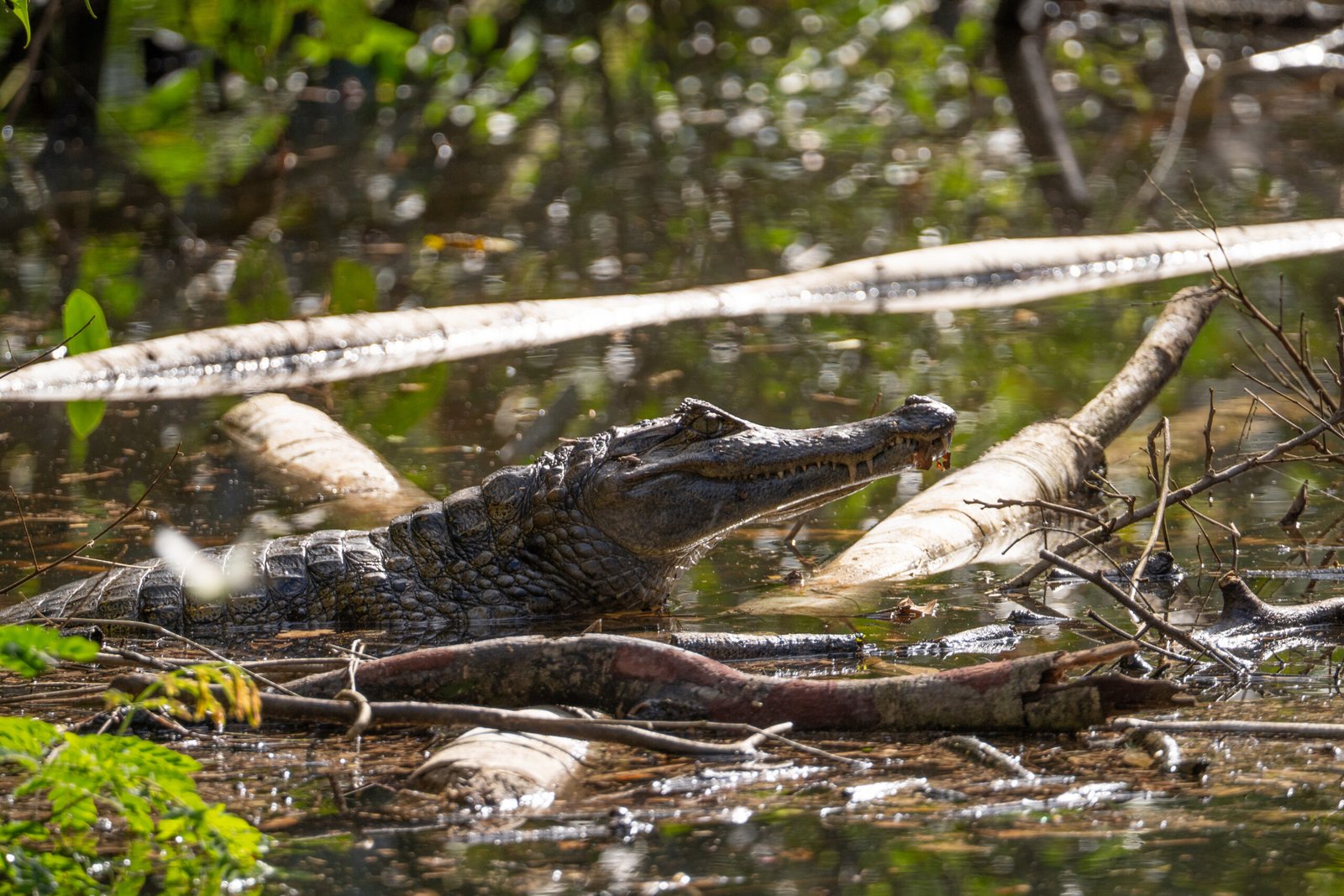
- Black Caiman (Melanosuchus niger) – The largest predator in the Amazon, inhabiting rivers and lakes.
- Spectacled Caiman (Caiman crocodilus) – Small to medium-sized crocodilian known for the bony ridge between its eyes.
- Common Boa (Boa constrictor) – A large, non-venomous snake that constricts its prey, found in a variety of habitats.
- Emerald Tree Boa (Corallus caninus) – Arboreal snake with bright green coloration and white markings.
- Bushmaster (Lachesis muta) – The largest viper in the Americas, known for its potent venom and elusive nature.
- Fer-de-Lance (Bothrops asper) – Highly venomous pit viper with a reputation for aggression and potent venom.
- South American Rattlesnake (Crotalus durissus) – Venomous snake with a distinctive rattle at the end of its tail.
- Rainbow Boa (Epicrates cenchria) – Boa with iridescent scales that give it a rainbow-like sheen.
- Amazon Tree Boa (Corallus hortulanus) – Tree-dwelling snake known for its diverse color patterns.
- Yellow-footed Tortoise (Chelonoidis denticulata) – Large tortoise with distinctive yellow scales on its limbs.
- Red-footed Tortoise (Chelonoidis carbonarius) – Tortoise with red markings on its limbs and head.
- Green Iguana (Iguana iguana) – Large, arboreal lizard known for its impressive size and vibrant green color.
- Tegu Lizard (Tupinambis teguixin) – Large lizard known for its robust build and omnivorous diet.
- Common Basilisk (Basiliscus basiliscus) – Known as the “Jesus Christ lizard” for its ability to run on water.
- Neotropical River Turtle (Podocnemis unifilis) – Aquatic turtle known for its distinctive yellow markings on the head.
- Yellow-spotted Amazon River Turtle (Podocnemis unifilis) – Freshwater turtle with yellow spots on its shell.
- Matamata Turtle (Chelus fimbriata) – Unique turtle with a flattened head and body that blends into its surroundings.
- Northern Caiman Lizard (Dracaena guianensis) – Semi-aquatic lizard known for its powerful jaws and vibrant coloration.
- Amazon Whiptail Lizard (Kentropyx pelviceps) – Fast-moving lizard often seen basking on logs and rocks.
- Common Vine Snake (Oxybelis fulgidus) – Slender, green snake that mimics vines and hunts by ambush.
- Eyelash Viper (Bothriechis schlegelii) – Venomous snake with distinctive “eyelash” scales above its eyes.
- Smooth-fronted Caiman (Paleosuchus trigonatus) – Small, secretive caiman often found in forest streams.
- Dwarf Caiman (Paleosuchus palpebrosus) – Smallest of the caiman species, known for its bony armor.
- Helmeted Iguana (Corytophanes cristatus) – Arboreal lizard with a prominent crest on its head and back.
- Collared Tree Runner (Plica plica) – Lizard that lives in the forest canopy, known for its agility and speed.
- Red-sided Skink (Mabuya spp.) – Small, ground-dwelling lizard with bright red flanks.
- Water Anole (Anolis aquaticus) – Semi-aquatic lizard that can stay submerged for extended periods.
- Giant Ameiva (Ameiva ameiva) – Large, ground-dwelling lizard with a vibrant, speckled pattern.
- Turnip-tailed Gecko (Thecadactylus rapicauda) – Nocturnal gecko known for its ability to drop its tail when threatened.
Amphibians
- Amazon Milk Frog (Trachycephalus resinifictrix) – A striking tree frog known for its milky secretions and vivid coloration.
- Blue Poison Dart Frog (Dendrobates tinctorius “azureus”) – A brightly colored frog known for its toxic skin and vibrant blue hue.
- Surinam Horned Frog (Ceratophrys cornuta) – Notable for its horn-like projections above its eyes and large mouth.
- Green-and-Black Poison Dart Frog (Dendrobates auratus) – Recognizable by its bright green and black pattern, another toxic amphibian.
- Cane Toad (Rhinella marina) – A large toad species known for its toxic skin and voracious appetite.
- Amazonian Tree Frog (Hypsiboas punctatus) – Known for its adaptability to various habitats within the Amazon.
- Glass Frog (Hyalinobatrachium spp.) – Unique for its translucent skin through which internal organs can be seen.
- Green Tree Frog (Hypsiboas crepitans) – A common species known for its distinctive call and green coloration.
- Tiger-Leg Monkey Frog (Phyllomedusa tomopterna) – Known for its bright orange and black striped legs and nocturnal behavior.
- Red-Eyed Tree Frog (Agalychnis callidryas) – Famous for its vibrant red eyes and colorful body, a common sight in the Amazon.
- Dwarf Caiman (Paleosuchus palpebrosus) – Although primarily reptiles, their larvae have amphibian stages.
- Common Rain Frog (Pristimantis unistrigatus) – A small, ground-dwelling frog known for its ability to thrive in a variety of habitats.
- Smoky Jungle Frog (Leptodactylus pentadactylus) – Notable for its large size and deep, resonant calls.
- Amazonian Poison Frog (Epipedobates trivittatus) – Known for its potent toxins and vibrant striping patterns.
- Giant Monkey Frog (Phyllomedusa bicolor) – Famous for its large size and secretion of a substance used in traditional medicine.
Insects
- Blue Morpho Butterfly (Morpho peleides) – Known for its stunning, iridescent blue wings, which are among the largest in the world.
- Leafcutter Ant (Atta spp.) – Famous for their complex societies and ability to carry leaves many times their body weight back to their nests.
- Bullet Ant (Paraponera clavata) – Known for its extremely painful sting, often described as the most painful insect sting in the world.
- Glasswing Butterfly (Greta oto) – Notable for its transparent wings that help it blend into its surroundings.
- Giant Water Bug (Belostomatidae) – Large aquatic insect known for its predatory behavior, feeding on fish and amphibians.
- Amazonian Giant Centipede (Scolopendra gigantea) – One of the largest centipedes, known for its venomous bite and predatory habits.
- Jewel Beetle (Buprestidae) – Recognized for their glossy, metallic colors, often used in jewelry and decoration.
- Goliath Birdeater (Theraphosa blondi) – The largest spider in the world by mass, known for preying on birds and small vertebrates.
- Army Ant (Eciton burchellii) – Known for their aggressive foraging behavior, forming large swarms that overwhelm prey.
- Lanternfly (Fulgora laternaria) – Distinctive for its unusual, elongated head, which resembles a peanut.
- Amazonian Giant Cockroach (Blaberus giganteus) – One of the largest cockroaches, known for its impressive size and nocturnal habits.
- Hercules Beetle (Dynastes hercules) – Recognizable by the large horn on males, used in battles over mates.
- Stick Insect (Phasmatodea) – Masters of camouflage, resembling twigs and branches to evade predators.
- Amazonian Bumblebee (Bombus transversalis) – Important pollinators in the rainforest ecosystem.
- Leaf-Mimic Katydid (Pterochroza ocellata) – Known for its incredible leaf-like appearance, providing camouflage against predators.
- Tiger Beetle (Cicindelinae) – Predatory beetles with fast running speeds and strong mandibles.
- Assassin Bug (Reduviidae) – Predatory insects known for their painful bite and predatory behavior on other insects.
- Amazonian Walking Stick (Eurycantha spp.) – Large, slow-moving insects that resemble sticks or branches.
- Giant Grasshopper (Tropidacris collaris) – One of the largest grasshoppers, known for its powerful jumping ability.
- Giant Amazonian Katydid (Tettigoniidae) – Large katydids known for their mimicry and nocturnal behavior.
- Silkmoth (Saturniidae) – Large moths with striking wing patterns, important for their role in the silk industry.
- Lantern Bug (Pyrops candelaria) – Known for its elongated snout and bright colors.
- Harlequin Beetle (Acrocinus longimanus) – Distinctive for its large size and striking coloration.
- Peacock Katydid (Pterophylla beltrani) – Named for its iridescent colors and leaf-like appearance.
- Banded Palm Civet (Hemigalus derbyanus) – A small nocturnal mammal known for its strikingly striped coat.
- Tarantula Hawk Wasp (Pepsis spp.) – Known for hunting tarantulas to provide food for their larvae, with a sting ranked among the most painful.
- Amazonian Rhinoceros Beetle (Megasoma elephas) – Large beetles with prominent horns used in battles for mates.
- Longhorn Beetle (Cerambycidae) – Notable for their long antennae, often as long as or longer than their bodies.
- Electric Blue Tarantula (Birupes simoroxigorum) – Striking tarantula species with electric blue coloration.
- Red-Legged Tarantula (Megaphobema mesomelas) – Known for its striking red legs and large size.
Fish
- Red-Bellied Piranha (Pygocentrus nattereri) – Known for their sharp teeth and powerful jaws, they are infamous for their feeding frenzies.
- Arapaima (Arapaima gigas) – One of the largest freshwater fish in the world, known for its ability to breathe air.
- Electric Eel (Electrophorus electricus) – Capable of generating powerful electric shocks to stun prey and deter predators.
- Peacock Bass (Cichla ocellaris) – Popular among sport fishers for their vibrant colors and fighting ability.
- Pacu (Piaractus brachypomus) – Known for their human-like teeth and primarily vegetarian diet.
- Black Ghost Knifefish (Apteronotus albifrons) – Recognized for their ability to generate weak electric fields for navigation and communication.
- Candiru (Vampire Fish) (Vandellia cirrhosa) – Infamous for its parasitic behavior, entering the gills of larger fish.
- Tiger Shovelnose Catfish (Pseudoplatystoma fasciatum) – Notable for its elongated body and distinctive striped pattern.
- Neon Tetra (Paracheirodon innesi) – Popular in aquariums for their striking iridescent blue and red coloration.
- Ripsaw Catfish (Oxydoras niger) – Known for the serrated edges of its pectoral fins, resembling a saw blade.
- Marbled Hatchetfish (Carnegiella strigata) – Recognized for their ability to jump out of the water to escape predators.
- Oscar (Astronotus ocellatus) – Popular aquarium fish known for their intelligence and aggressive behavior.
- Silver Arowana (Osteoglossum bicirrhosum) – Known for their ability to leap out of the water to catch prey.
- Banded Leporinus (Leporinus fasciatus) – Recognized for its black and yellow banded pattern.
- Disc Tetra (Myleus schomburgkii) – Known for their distinctive disc-shaped bodies and silver coloration.
- Spotted Sorubim (Pseudoplatystoma corruscans) – Large predatory catfish known for its spotted body.
- Farlowella Catfish (Farlowella acus) – Notable for its long, slender body that resembles a stick.
- Piraiba Catfish (Brachyplatystoma filamentosum) – One of the largest catfish species, known for its massive size.
- Three-Striped Corydoras (Corydoras trilineatus) – Popular aquarium fish known for their peaceful nature and distinctive striping.
- Redtail Catfish (Phractocephalus hemioliopterus) – Known for its red tail and large size, often seen in aquariums.
- Rummy-Nose Tetra (Hemigrammus rhodostomus) – Recognized for its red nose and striped tail.
- Glass Catfish (Kryptopterus bicirrhis) – Unique for their transparent bodies, making their internal organs visible.
- Brichardi Cichlid (Neolamprologus brichardi) – Known for their elongated bodies and complex social structures.
- Congo Tetra (Phenacogrammus interruptus) – Popular for its iridescent coloration and long fins.
- Blue Acara (Andinoacara pulcher) – Known for their blue-green coloration and aggressive behavior.
- Banded Cichlid (Heros severus) – Recognized for their vertical banding and parental care behavior.
- Rainbow Cichlid (Herotilapia multispinosa) – Known for their vibrant coloration and peaceful nature.
- Jaguar Cichlid (Parachromis managuensis) – Named for its jaguar-like spots and aggressive demeanor.
- Leopard Pleco (Pterygoplichthys gibbiceps) – Known for their spotted pattern and algae-eating habits.
- Pike Cichlid (Crenicichla spp.) – Notable for their elongated bodies and predatory nature.